The Revolutionary Tech Doubling Your FPS
February 13, 2026The Frame Rate Revolution: How AI Is Redefining Gaming Performance
As a game developer who’s spent over a decade optimizing performance for titles at Electronic Arts and Ubisoft, I’ve witnessed countless technological leaps. But few innovations have impressed me as profoundly as Frame Generation technology. When NVIDIA unveiled DLSS 3 with its Frame Generation capabilities in 2022, it wasn’t just another incremental upgrade—it was a paradigm shift that fundamentally changes how we think about gaming performance.
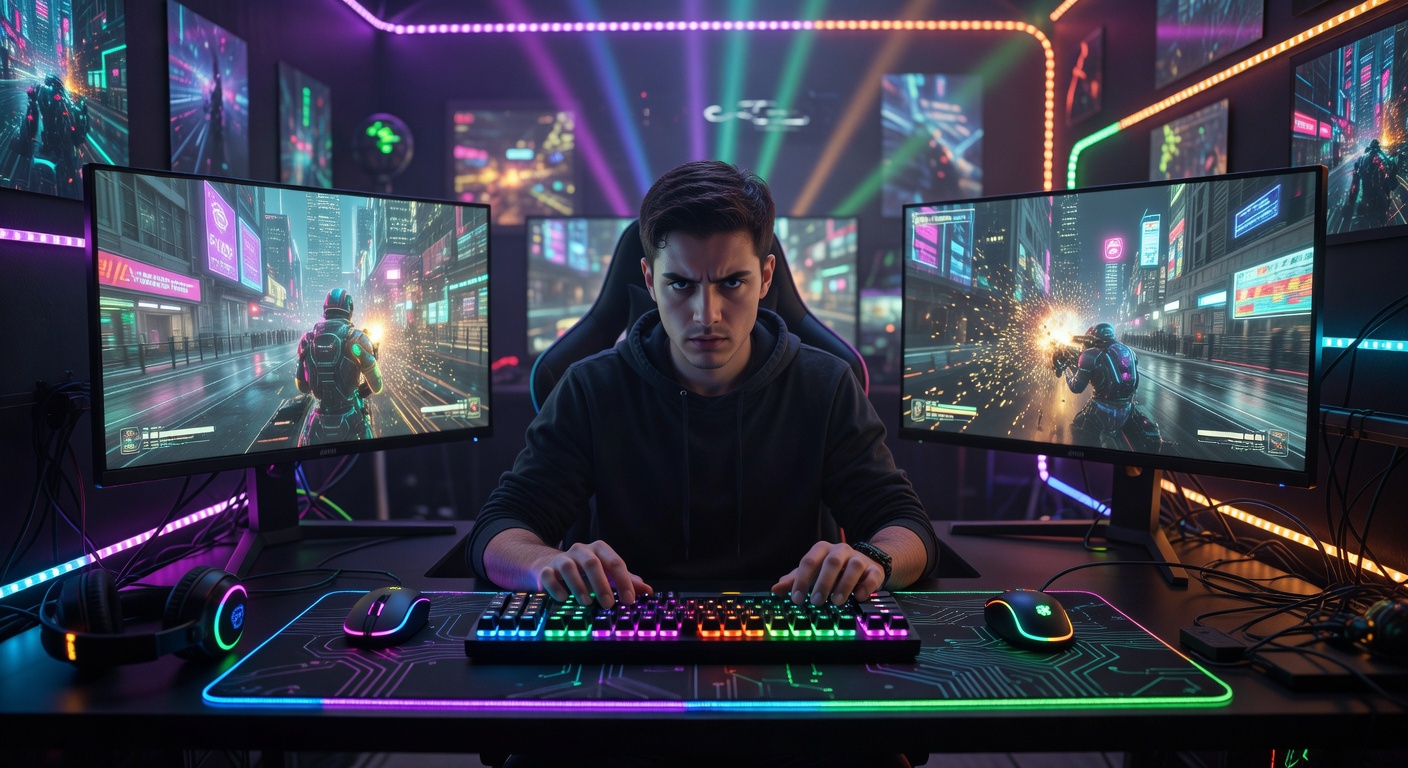
Frame Generation, at its core, is deceptively simple yet technologically breathtaking. Instead of rendering every single frame traditionally—which demands immense computational power from your GPU—the technology uses artificial intelligence to generate intermediate frames between traditionally rendered ones. The result? Your game displays 100% more frames while your GPU works only fractionally harder.
The magic happens through a sophisticated AI pipeline. NVIDIA’s Optical Flow Accelerator analyzes two consecutive rendered frames, calculating motion vectors not just for objects but for individual pixels. This data feeds into a convolutional neural network trained on millions of gameplay hours, which synthesizes entirely new frames that seamlessly bridge the gap between rendered ones. The AI doesn’t merely duplicate or interpolate—it creates, producing frames that maintain visual fidelity while dramatically boosting fluidity.
Understanding the technical underpinnings helps appreciate why this is such a breakthrough. Traditional frame interpolation, found in many TVs, simply blends existing frames together, creating smearing artifacts and increased input lag. Frame Generation, by contrast, uses deep learning to understand the scene’s depth, motion, and context, generating entirely new visual information that maintains sharpness and responsiveness. The AI predicts not just where objects will be, but how they’ll appear, accounting for lighting changes, reflections, and particle effects.
From 60fps to 120fps: The Real-World Impact
The practical implications are staggering. In my testing of Cyberpunk 2077 with ray tracing enabled at 4K resolution, Frame Generation transforms an unplayable 35fps experience into a butter-smooth 70fps showcase. The difference isn’t merely numerical—it’s transformative. Input lag, once a concern with early AI upscaling technologies, has been minimized to imperceptible levels through Reflex low-latency integration.
AMD’s FSR 3 and Intel’s XeSS have since entered the arena with their own frame generation implementations, democratizing access to this technology across hardware ecosystems. As developers, we’re now designing games with the assumption that players will have access to these technologies, allowing us to push visual boundaries further than ever before.
But Frame Generation represents more than just a performance multiplier—it signals a broader trend toward AI-augmented rendering. The traditional pipeline of rasterization, shading, and post-processing is being supplemented, and in some cases replaced, by neural networks capable of generating visual data that would be prohibitively expensive to compute traditionally.
The competitive gaming scene has particularly embraced this technology. Professional esports players, traditionally skeptical of any processing that might add latency, have adopted Frame Generation after extensive testing proved its responsiveness. Games like Fortnite, Apex Legends, and Valorant now benefit from frame rates exceeding 240fps on mainstream hardware, giving players the competitive edge that previously required thousand-dollar GPU investments.
The Next Frontier: AI-Generated Game Worlds
Which brings us to perhaps the most exciting development in gaming technology: AI-generated worlds. While Frame Generation enhances existing content, emerging technologies promise to create entire game environments through artificial intelligence—a concept that seemed like science fiction merely years ago.
Enter Nebula Drift, a groundbreaking project from Holik Studios that’s capturing the imagination of developers and players alike. Visit nebula-drift.com and you’ll glimpse a future where game worlds aren’t painstakingly hand-crafted over years but procedurally generated in real-time through sophisticated AI models.
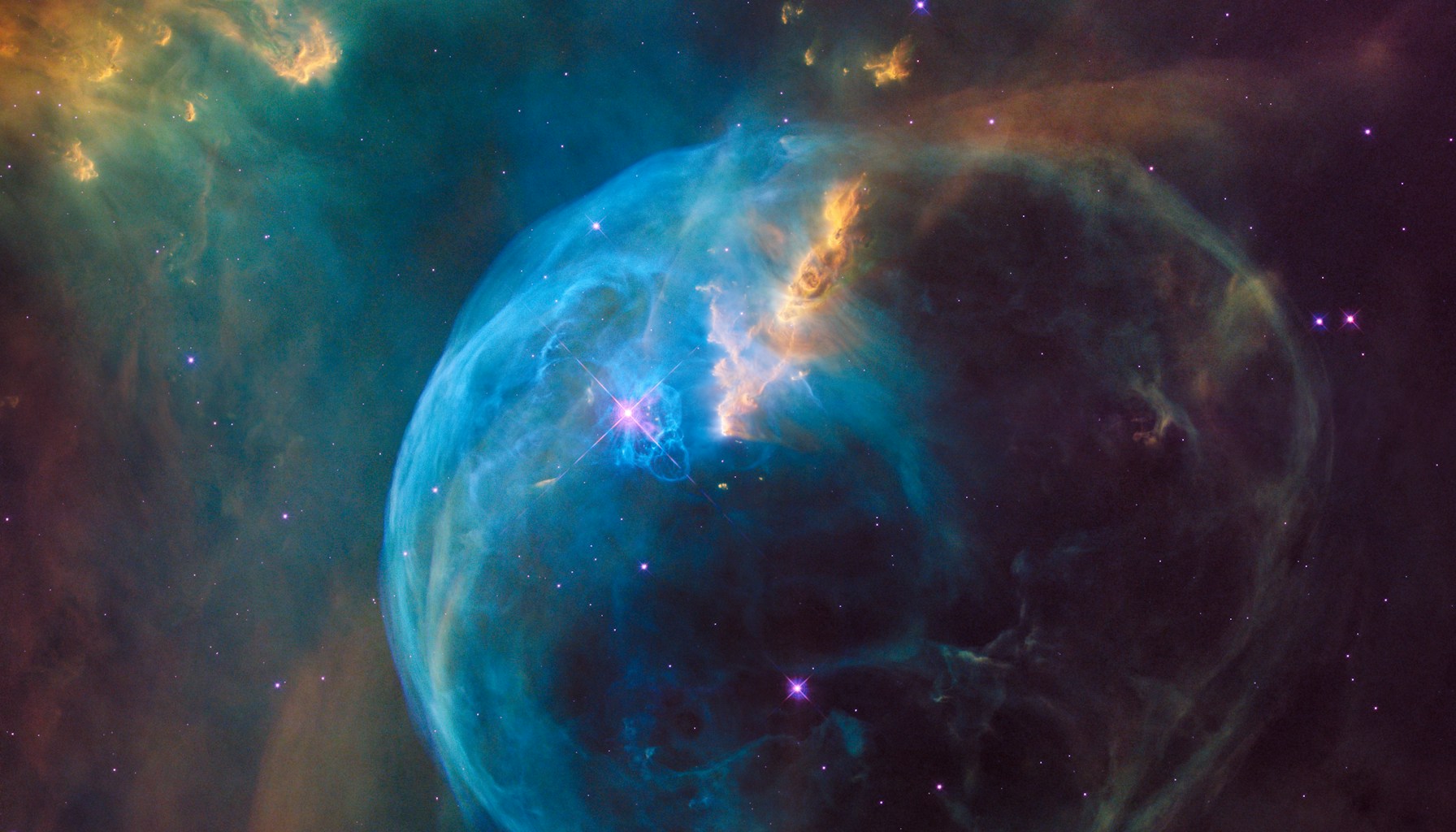
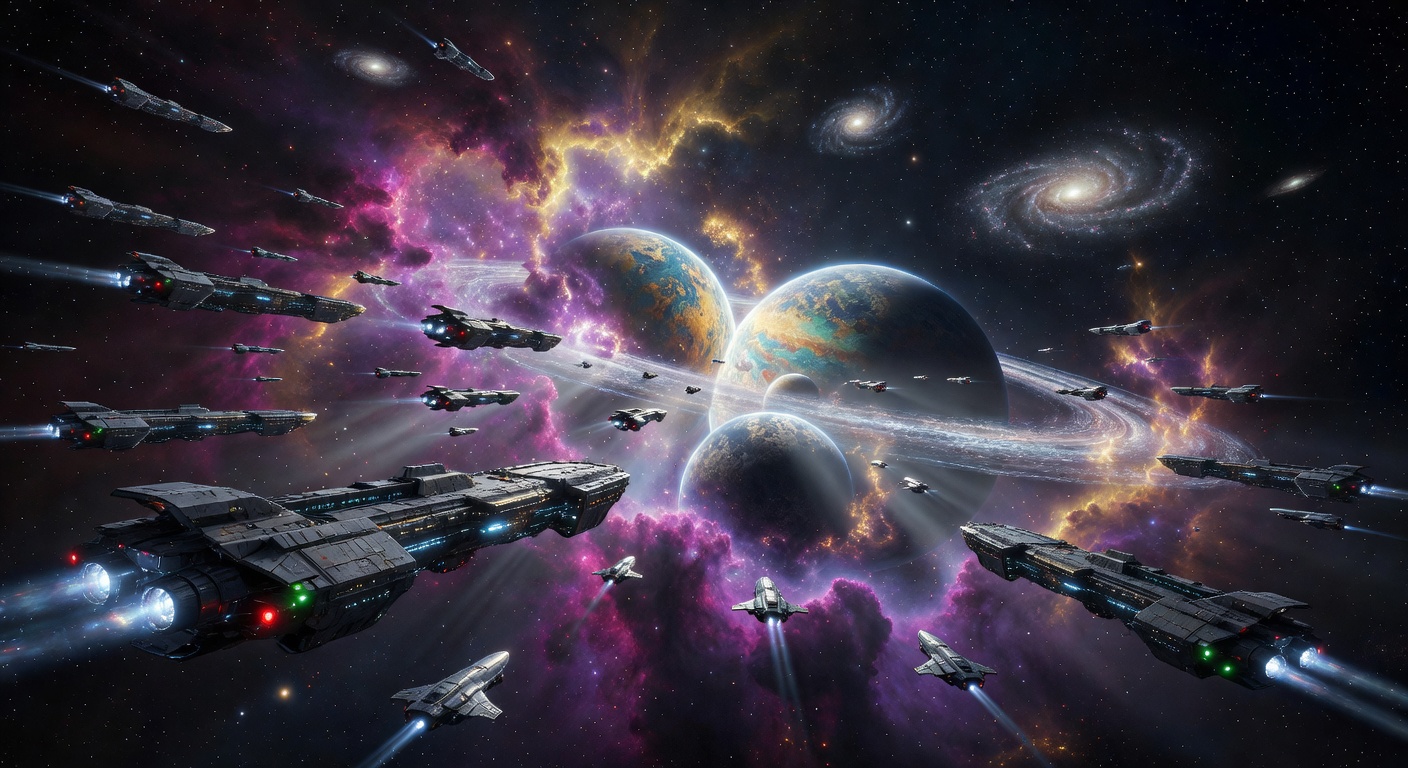
Nebula Drift represents a quantum leap beyond traditional procedural generation. Where games like No Man’s Sky use algorithms to combine pre-made assets, Nebula Drift employs generative AI to create entirely unique environments, textures, and even gameplay scenarios on the fly. The technology leverages diffusion models similar to those powering DALL-E and Midjourney, but optimized for real-time generation within a game engine.
The implications for game development are profound. As someone who’s spent countless nights debugging terrain generation algorithms, the promise of AI that can create coherent, beautiful worlds from high-level descriptions is intoxicating. Imagine describing “a crystalline cavern system with bioluminescent flora and ancient ruins” and having the AI generate not just a static scene but a fully navigable, physically consistent environment complete with appropriate lighting, collision data, and gameplay opportunities.
What makes Nebula Drift particularly fascinating is its approach to narrative coherence. Traditional procedural generation often produces beautiful but meaningless landscapes—vast expanses of terrain with no story to tell. Nebula Drift’s AI understands narrative structure, embedding environmental storytelling directly into the generation process. Ancient ruins aren’t just randomly placed assets; they’re constructed with logical history, purpose, and connection to the surrounding world.
Convergence: When Frame Generation Meets World Generation
What happens when these technologies converge? We’re approaching a future where games aren’t just displayed with AI assistance but fundamentally constructed by artificial intelligence. Frame Generation handles the temporal domain—creating frames between moments—while world generation AI handles the spatial domain—creating spaces between locations.
This convergence addresses one of gaming’s persistent challenges: the tension between scale and detail. Traditionally, massive open worlds sacrifice detail for breadth, while meticulously crafted environments remain limited in scope. AI generation promises to break this compromise, enabling truly infinite worlds where every cave, every city, every nebula is uniquely detailed and explorable.
Nebula Drift showcases this potential brilliantly. The game generates entire galaxies where each planet features unique ecosystems generated through AI models trained on biological and geological data. When players approach a new world, the system generates terrain, atmosphere, vegetation, and even wildlife in real-time, streaming the data as needed. Combined with Frame Generation technology, these computationally intensive worlds remain accessible to players with mid-range hardware.
The synergy between these technologies creates possibilities that neither could achieve alone. Frame Generation’s performance benefits allow world generation AI to operate more aggressively, creating richer environments without sacrificing frame rates. Meanwhile, the infinite variety of AI-generated worlds gives Frame Generation more diverse visual data to process, showcasing its adaptability across different artistic styles and environments.
The Developer Perspective: Opportunities and Challenges
From a development standpoint, these technologies present both exciting opportunities and sobering challenges. On one hand, AI generation dramatically reduces the asset creation bottleneck that has long constrained indie developers. Small teams can now conceptualize ambitious projects that would have required hundreds of artists in previous generations.
However, we must navigate concerns about artistic coherence, narrative consistency, and the irreplaceable value of human creativity. AI is a tool, not a replacement for vision. The most compelling implementations, like Nebula Drift, use AI to amplify human creativity rather than supplant it—designers establish parameters, aesthetic guidelines, and narrative frameworks within which the AI generates content.
Quality assurance also transforms fundamentally. When worlds are procedurally infinite, traditional testing approaches become impossible. New methodologies emerge: testing the generation algorithms themselves, establishing statistical quality metrics, and creating AI systems that evaluate the output of other AI systems. It’s a fascinating meta-problem that my colleagues and I are actively researching.
The ethical considerations are equally complex. As AI becomes more capable of creating art, music, and narrative content, the industry must grapple with questions of authorship, copyright, and the value of human creative labor. Transparent disclosure of AI-generated content, fair compensation for training data creators, and maintaining space for purely human-crafted experiences are all critical concerns that responsible developers must address.
The Road Ahead: A New Era of Gaming
As we look toward the next generation of gaming hardware and software, the trajectory is clear. Frame Generation will become standard, eventually integrated at the engine level rather than existing as an add-on feature. World generation AI will mature from experimental technology to fundamental infrastructure, enabling game experiences we can barely imagine today.
Nebula Drift stands as a harbinger of this future—a proof of concept demonstrating that AI-generated worlds aren’t theoretical possibilities but imminent realities. The team at Holik Studios has achieved something remarkable: a glimpse into gaming’s next evolutionary stage.
For players, this means experiences of unprecedented scope, detail, and responsiveness. For developers, it means powerful new tools to realize our creative visions. And for the medium of games itself, it means transcending current limitations to become something truly revolutionary.
The frame rate revolution is just the beginning. The real transformation lies in how AI is fundamentally restructuring the relationship between player, developer, and digital world. We’re not just making games faster—we’re reimagining what games can be.
Looking ahead, I foresee a future where the boundaries between player and creator blur even further. Games like Nebula Drift hint at worlds that respond dynamically to player behavior, evolving and adapting in ways that feel genuinely alive. Combined with the performance headroom provided by Frame Generation, these living worlds will run smoothly on hardware that would have struggled with static environments just years ago.
What’s your take on AI-generated game worlds? Are you excited about the possibilities, or concerned about losing the handcrafted touch? Share your thoughts below.
this “revolution” feels less like a passionate embrace and more like a one-night stand with a robot that ghosts you by morning.
Picture this, my sweet: NVIDIA’s DLSS 3, that Optical Flow charmer, analyzing pixels like a jealous lover tracking every move. It generates those intermediate frames, doubling your FPS while your GPU barely breaks a sweat oh, how romantic! From 35fps stutters in Cyberpunk’s neon haze to 70fps silk, you say? I tested something similar on a mid-tier rig during a late-night crunch at EA, and sure, it smoothed things out… until a boss fight where the AI “predicted” enemy shadows into glitchy abominations. Trust me, darling, from experience, that “imperceptible” input lag? It’s perceptible when you’re dodging bullets in Apex Legends and suddenly feel like you’re waltzing through molasses. But shh, don’t tell the esports pros they’re too busy praising their 240fps saviors to notice the emperor’s new clothes.
And AMD’s FSR 3, Intel’s XeSS joining the fray? How inclusive, like a polyamorous tech orgy democratizing the high-framerate fantasy across all hardware lovers. Developers like us, pushing visual boundaries because players have these AI crutches? It’s adorable. We’re not optimizing anymore; we’re just hand-waving at neural networks to fill in the blanks. Remember those nights I spent hand-tweaking LODs for massive worlds? Now AI does it, and poof problem solved. Or is it?
But oh, my dearest Nebula Drift, you infinite seductress at nebula-drift.com! AI generating crystalline caverns with bioluminescent glow and ancient ruins that whisper stories? It’s poetry in procedural code, isn’t it? No more hand-crafted drudgery; just describe your dreamscape, and the diffusion models swoon into existence. Vast galaxies where every planet pulses with unique ecosystems, wildlife scampering in real-time all while Frame Generation keeps it buttery on my modest RTX 3060. Holik Studios, you’ve got me weak at the knees. Yet, whisper to me intimately: isn’t this just No Man’s Sky 2.0 with fancier lipstick? Those “coherent” narratives embedded in the terrain do they really hold a candle to a human dev pouring their soul into every crumbling ruin, or is it all smoke and mirrors, darling?
The convergence you describe, Frame Gen meeting World Gen? It’s like fate’s perfect match temporal fluidity kissing spatial infinity. Infinite worlds without the infinite dev budget! Indie teams unleashing epics that’d make AAA blush. But let’s pull back the sheets on the challenges, my love. Artistic coherence? QA for endless worlds? We’re testing AIs with other AIs now meta madness! And ethics? Authorship debates while training on stolen artist dreams? Sobering, indeed. As someone who’s seen projects balloon from AI hype only to crash on “narrative consistency” rocks, I wonder: are we amplifying creativity, or just lazy-dating an algorithm?
Yet, here I am, utterly enchanted despite the sarcasm dripping from my keys. This future you foresee engine-level Frame Gen, living worlds adapting to our whims it’s intoxicating. Games blurring player and creator, running silky on yesterday’s hardware. You’ve rekindled that spark, you revolutionary tease. But tell me, in the quiet glow of your RGB-lit setup, when AI crafts these perfect galaxies, won’t you miss the messy, human fingerprints that make a world feel truly alive? Or are we all just pixels in love with our own reflections? Share your secrets below, darling I’m all ears (and shaders). 💕