Skyrim: Timeless Open-World RPG Epic
December 21, 2025The Elder Scrolls V: Skyrim – A Timeless Open-World Epic
Game Overview: Characteristics, Target Audience, and Development History
The Elder Scrolls V: Skyrim, released on November 11, 2011, by Bethesda Game Studios, stands as the fifth main installment in the critically acclaimed Elder Scrolls series. Set in the northernmost province of Tamriel a vast, frozen wilderness known as Skyrim this action role-playing game (RPG) immerses players in a richly detailed fantasy world approximately 200 years after the events of The Elder Scrolls IV: Oblivion.
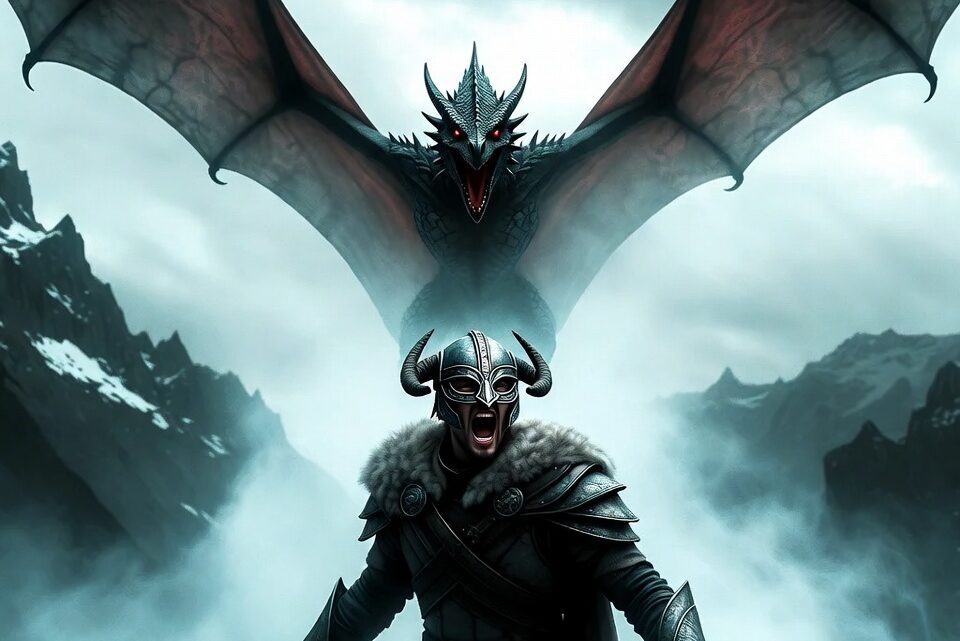
The narrative centers on the player character’s discovery as the “Dragonborn,” a prophesied hero with the unique ability to absorb dragon souls and wield ancient “Thu’um” shouts powerful vocal abilities like fire breath, time slow, or force blasts. Dragons, long dormant, have reawakened, terrorizing the land amid a brewing civil war between Imperial loyalists and Stormcloak rebels.
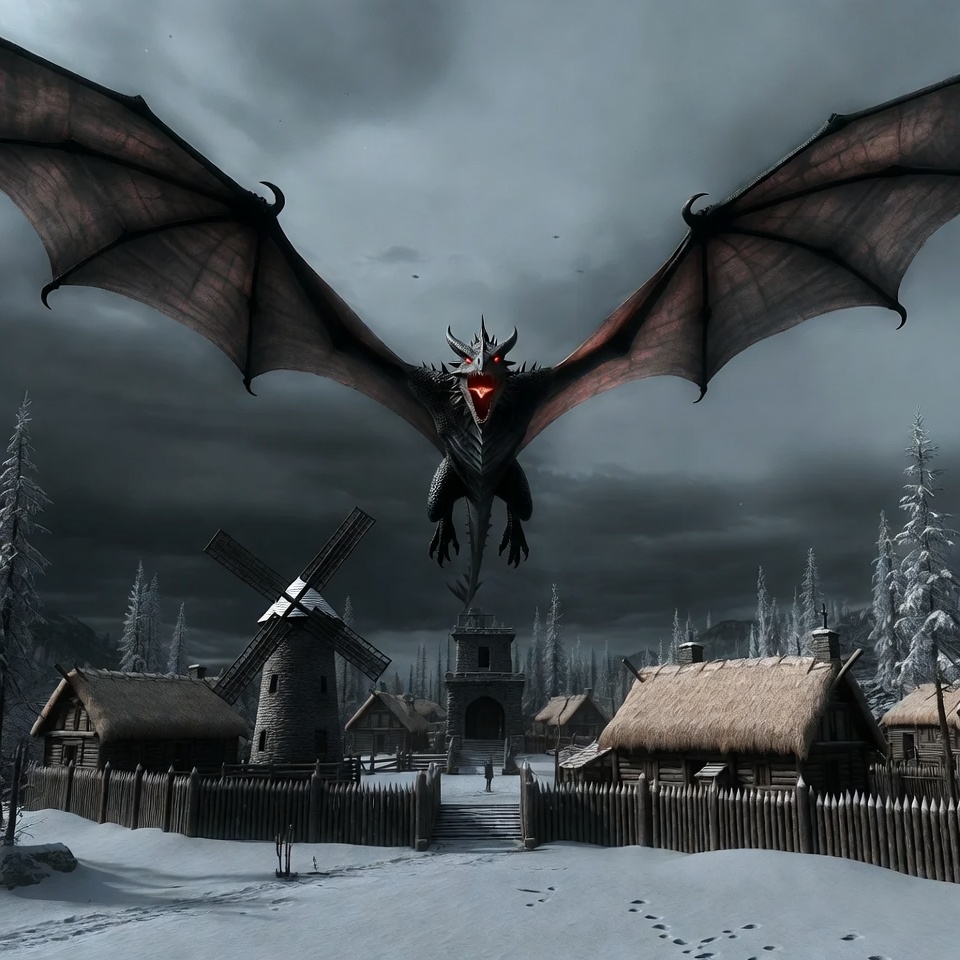
At its core, Skyrim is an open-world first- and third-person RPG emphasizing unparalleled player freedom. Unlike rigid class-based systems, character creation begins simply with race selection (e.g., Nord, Dark Elf, Argonian), after which skills level organically through use: cast fireballs to advance Destruction magic, smith armor to boost Smithing, or pick locks to hone Thievery. This “do-what-you-want” progression allows hybrid builds, such as an armored mage enchanting gear for amplified spells or a stealthy archer dual-wielding daggers. Combat blends melee (one-handed swords, two-handed greatswords, axes), ranged archery, and magic (dual-casting for devastating effects like nuking foes with fireballs), enhanced by perks unlocked via leveling. Exploration yields dynamic dragon encounters massive beasts swooping from the skies, patrolling skies, or assaulting villages tying into soul absorption for shout unlocks.
The game’s colossal map spans snowy peaks, dense forests, ancient ruins, and bustling holds like Whiterun and Riften, populated by over 100 hours of content: a main questline unraveling the dragon threat, faction stories (e.g., mages at the College of Winterhold, assassins in the Dark Brotherhood), Daedric prince quests, civil war campaigns, and radiant side quests. Radiant AI improves NPC behaviors over predecessors, with natural conversations, dynamic events (e.g., dragons killing townsfolk), and a living economy. Technical specs include stunning visuals swirling mists, detailed armor etchings, aurora-lit skies paired with Jeremy Soule’s haunting orchestral soundtrack evoking epic adventure.
Target Audience: Skyrim appeals to mature gamers aged 17+ (ESRB M for blood, violence, sexual themes), particularly fans of deep RPGs, open-world sandboxes, and fantasy lore. It attracts solo explorers craving emergent storytelling, power fantasy builders optimizing perk trees, and lore enthusiasts delving into 1,000+ books. Casual players enjoy accessible quests, while completionists chase 500+ hours of sniffing every corner, from hidden word walls to Dwemer automatons.
Previous Versions and History: As the latest in Bethesda’s Elder Scrolls saga (Morrowind in 2002, Oblivion in 2006), Skyrim builds directly on Oblivion’s framework but addresses key flaws. Oblivion’s leveled enemies scaled aggressively with players, rendering high-level play frustrating (e.g., mudcrabs becoming lethal). Skyrim fixes this with static enemy tiers, making progression feel rewarding one-hit kills via lightning bolts after grinding skills. Character models and AI evolve from Oblivion’s awkward stiffness, with fluid dialogue replacing eerie pauses. Expansions like Dawnguard (vampire/werewolf hunts), Hearthfire (home-building), and Dragonborn (Solstheim return) extend replayability, while re-releases (Special Edition 2016, Anniversary Edition 2021) add mod support, 4K visuals, and fishing mini-games. No prior direct sequels exist, but the Creation Engine debut here powers future titles.
Positive Feedback: What Players and Critics Raved About
User and critic acclaim for Skyrim has been overwhelming, cementing its status as a generational masterpiece. Reviewers consistently praised its revolutionary gameplay freedom, turning every playthrough into a unique saga.
Unmatched Character Freedom and Build Variety
Players lauded the abandonment of Oblivion’s preset classes for a “play-to-level” system. “You just have your guy and whatever you want him to be like if you want him to be good at magic, you use magic and he’ll level up,” one reviewer enthused, highlighting how skills like Alchemy, Enchanting, and Sneaking naturally progress. This flexibility shines in hybrid builds: “You can really build up a character… so you want to be a mage who wears armor? Oh look, I just built up my enchantment now I’ve enchanted all my armor with buffs to make my magic stronger.” Perk trees amplify this, with points spent on decapitating strikes, dual-casting fireballs for “nuke-level” devastation, or stealth perks for invisible assassinations. “Exploring the perk tree feels just as exciting and rewarding as exploring Skyrim,” noted IGN, emphasizing regret-free specialization after hands-on trials.
Thrilling Combat and Iconic Dragons
Combat drew universal praise for its visceral upgrades. Magic feels “gratifying” powerful fireballs “burn guys to the ground,” tasting “how powerful fireballs should feel in every game.” Melee improvements make close-range swings the series’ best, with third-person views enhanced for dynamic duels. Dragons steal the show: “The dragons in this game are awesome… you see that shadow fly right over and you hear it just scream get the magic ready, let’s kill a dragon!” Encounters interrupt quests organically dragons raze villages, slay blacksmiths, or ambush mid-conversation forcing adaptive heroism. Shouts add flair: no Magicka cost for fire breath or Slow Time, unlocked via soul absorption. “Dragons look pretty damn cool,” even if repetitive, ensuring every fight expands arsenals.
Expansive, Living World and Endless Content
Skyrim’s scale astounds: “This game [is] enormous… at 40 hours, I explored about one-fourth of the map… over a hundred hours easy.” Critics hailed its “colossal fictional world that constantly surprises even after over 100 hours,” packed with “creatively designed content” like radiant quests, Daedric errands (e.g., Molag Bal’s depraved rituals for evil runs), and faction arcs. Visuals stun “staggering attention to detail” in misty mountains, etched weapons, and auroras while Soule’s “achingly beautiful soundtrack” fuels “a powerful sense of adventure and discovery.” NPCs feel alive: “Conversations flow naturally… a dramatic improvement over previous Elder Scrolls games.” Freedom reigns buy homes, hoard books, wander aimlessly. “No game is able to instill such… exploration,” making it “one of the best role-playing games ever made.”
Improvements over Oblivion amplified joy: fixed scaling ensures “when you level up and become badass, you really feel it one hit kill those guys with your magic.” Followers tank early quests, evolving into customizable allies. Reviewers agreed: “You totally get your money’s worth… Skyrim is awesome-tacular.”
Negative Reviews: Critiques and Shortcomings
Despite its triumphs, Skyrim isn’t flawless. Bugs, repetition, and technical quirks temper enthusiasm, especially for perfectionists.
Persistent Glitches and Technical Hiccups
Collision issues irk: “Sometimes your guy gets stuck… trying to jump over a little stone… your foot’s stuck in the stone you got to back up.” Broader bugs range from “glitchy character models” and “teleporting mammoths” to “irritating broken quests,” potentially halting progress. Animations remain “stiff,” and faces look “awkward,” relics of 2011 tech.
Combat Repetition and Floatiness
Weapon combat feels “floaty like you’re slicing air instead of through flesh,” improving with perks but needing work. Dragons, while epic initially, grow “repetitive as [they] repeat the same behaviors the excitement wears off after a few fights.” Not all content impresses: “Not every story told in Skyrim manages to impress.”
Missing Features and Overwhelm
No multiplayer disappoints: “The game is big enough… if you want to team up with a friend.” Followers help but betray fragility “they can’t die? Yeah they can die, so be aware.” Length daunts some: “It just sounds too big and daunting I don’t know if I can take that on.” Evil quests tempt thematic purity-breakers, but side stories occasionally falter.
These gripes, often patchable, rarely derail the experience but highlight Bethesda’s ambition-outpacing-polish reality.
Comparisons to Competitors and Future Speculations
Skyrim towers over 2011 peers like Batman: Arkham City (excellent but 20-40 hours) or Portal (puzzle brevity), its 100-500 hours dwarfing them: “The length of Skyrim makes Arkham City look about as long as Portal 1.” Versus Oblivion, it’s a leap smarter scaling, natural AI, flexible builds fix frustration.
| Game | Strengths vs. Skyrim | Weaknesses vs. Skyrim | Key Difference |
| Fallout 3 / New Vegas | Post-apoc satire, gunplay, moral ambiguity | Less fantasy magic, smaller scale | Skyrim’s dragons/shouts > V.A.T.S.; Skyrim’s medieval fantasy edges immersion. |
| Dragon Age: Origins | Tactical party combat, branching narratives | Linear structure, class locks | Skyrim’s solo freedom trumps Origins’ squad focus; higher replayability. |
| The Witcher 2 | Mature story, choice consequences, spectacle fights | Linear quests, less exploration | Skyrim’s sandbox > Witcher 2’s rails; Geralt has depth but lacks perk variety. |
| Mass Effect 3 | Space opera, squad banter, epic setpieces | Shorter, shooter-heavy | Skyrim’s eternal replay > ME3’s finale; pure RPG vs. hybrid experience. |
From a hardcore RPG lens, Skyrim excels in emergence random dragon dives mid-quest outshine Witcher’s scripted drama. Casual explorers prefer its wanderlust over Fallout’s radiation grind. Modders thrive via Creation Kit, birthing 100,000+ mods (e.g., Enderal total conversions).
Future Outlook: Post-Anniversary Edition (2021), Skyrim endures on Switch, VR, and next-gen via mods/AI upscales. Bethesda prioritizes Starfield/Elder Scrolls VI (high-fantasy successor, rumored 2026+ with Creation Engine 2), but Skyrim’s engine limits show glitches persist sans full remake. Speculation: ES6 iterates shouts, multiplayer (Elder Scrolls Online proves viable), deeper AI. Yet Skyrim’s mod ecosystem ensures immortality; it’ll outlive competitors as “the fantasy game of fantasy games,” potentially hitting 30-year milestones with VR/AR revamps. If genied to an island? “A computer, monitor, power source, and Skyrim” eternal entertainment awaits.